Notes on AI automation
No jargon, no hype. Just what we've learned building agents that actually run in production.
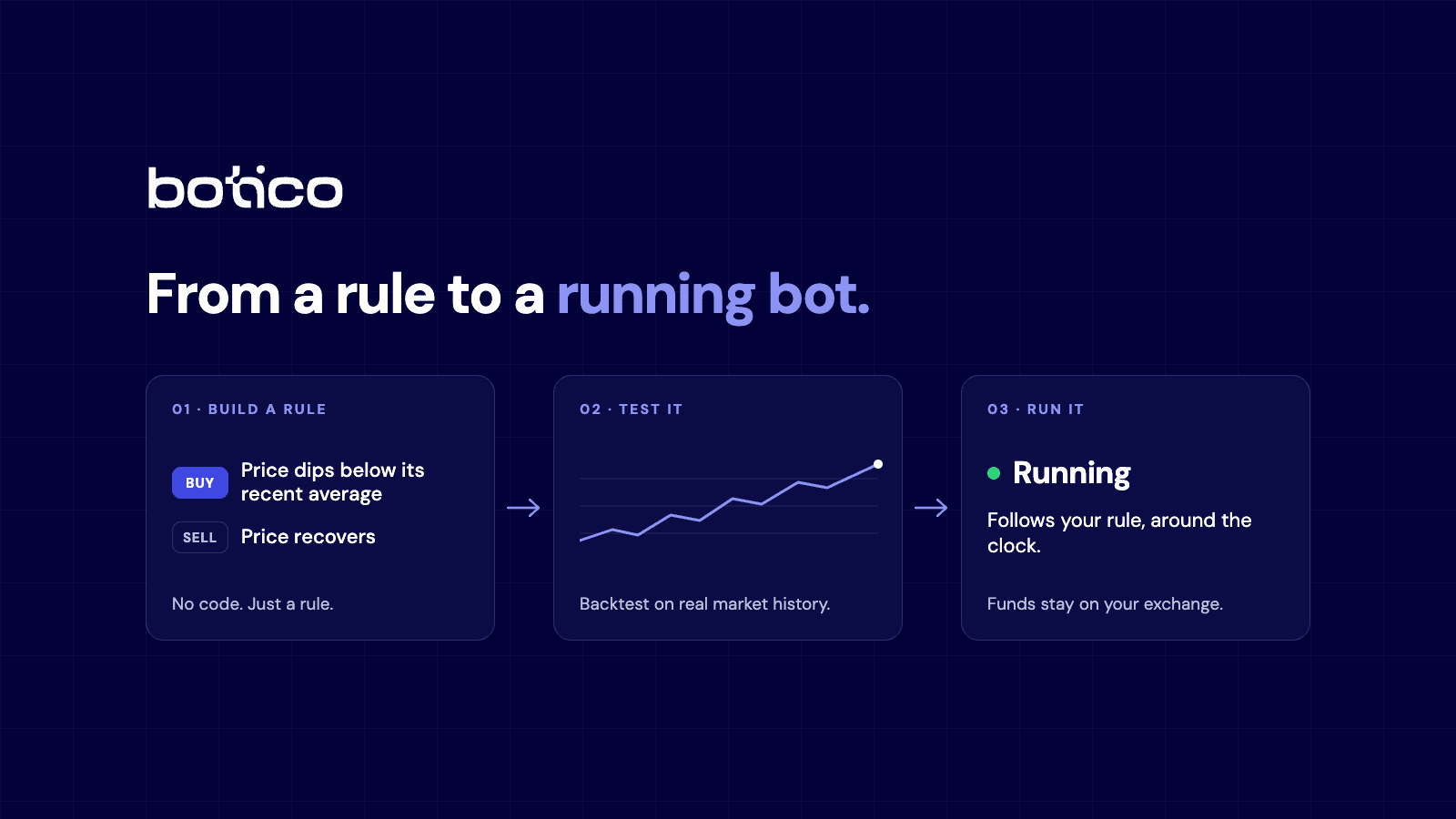
Botico Explained: How No-Code Trading Bots Work, Step by Step
A plain-English tour of Botico, the no-code algorithmic trading platform: building a strategy, setting risk limits, backtesting, paper trading, running a bot and copy trading. No trading background needed.
Why AI Automation Fails After the Demo: A Production Checklist
A working demo proves the idea. It says very little about reliability, permissions, cost or ownership. These are the engineering problems that decide whether an AI workflow survives real operations.
From AI Assistants to AI Operations: Where Business Automation Is Going
The first wave of business AI lived in a chat window next to the work. The next one lives inside the workflow. What changes when AI is wired into real systems, and where it should not decide alone.

Where to Start Automating Your Business (Without Hiring a Team)
Choose a first process that is frequent, well understood, measurable, and safe to correct when something goes wrong.

How Many Hours a Week Are You Losing to Manual Work?
Use a simple one-day review to estimate the weekly labor tied to repetitive work, then decide which tasks are worth examining first.
AI Agent vs. Chatbot: What's Actually Different
Compare a conversational interface with software that can use approved tools, coordinate workflow steps, and take defined actions.

Signs Your Business Is Ready for Its First AI Agent
Check whether the task, data access, repetition, ownership, and operating risk are ready for a first AI agent project.

Fixed Price vs. Hourly: How AI Agencies Actually Quote Projects
Two agencies can quote the same project two completely different ways. Here's what each pricing model actually means for your risk, not just your invoice.

Data Security Basics When an AI Agent Touches Your Systems
Review permissions, audit trails, human approval, provider terms, credential handling, retention, and incident responsibilities.

The Real Cost of a Bad Integration (And How to Avoid One)
Weak permissions, silent failures, poor field mapping, and missing documentation can turn a useful AI workflow into ongoing cleanup.

How to Scope an AI Agent Project Before You Pay for Anything
A practical scope defines the task, systems, permissions, test cases, exceptions, acceptance criteria, costs, and post-launch responsibilities.

Why AI Pilots Stall Before Production
A promising demo can still stall when ownership, scope, operating responsibility, and adoption are unresolved. Here is what teams need to decide next.

What Does "AI Agent" Actually Mean? A Plain-Language Glossary
The term gets used for a dozen different things right now. Before you buy anything, here's what the words in the pitch actually mean.
What Happens After Your AI Agent Launches
After launch, real inputs expose edge cases and integration changes. Monitoring, maintenance, bug fixes, and new development need clear owners.
Can a Small Business Actually Afford an AI Agent?
See Brixx's published starting prices, what increases implementation cost, and which ongoing expenses belong in a small-business budget.